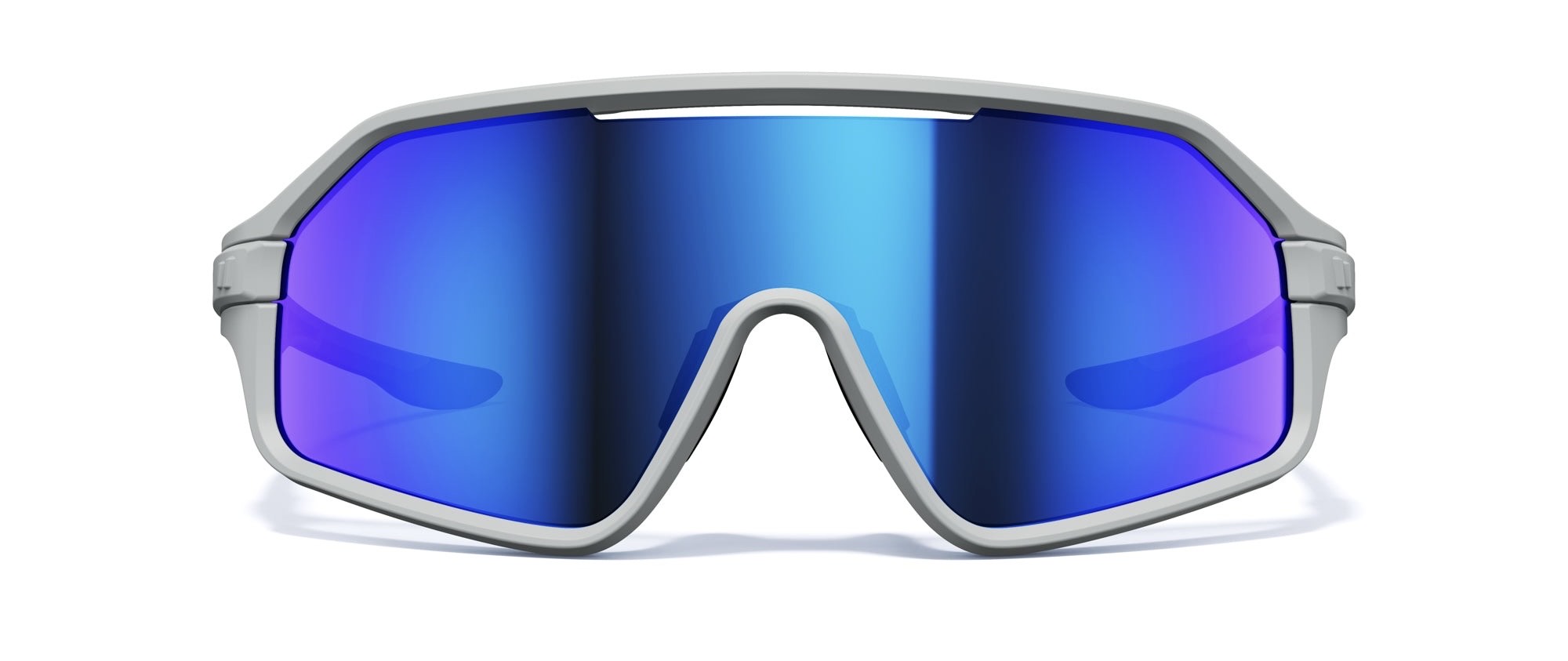


For years, athletes with low nose bridges and high cheekbones have been told to “just get Asian fit.”. As if one label could fix an industry built around the wrong face shape.
But if you’ve tried them, you already know:
They still slide.
They still touch your cheeks.
They still fog.
They still distract you when you’re training.
So what’s actually going on?
Let’s break down why most so-called Asian Fit sunglasses still fail — and what real performance fit looks like.
The Problem with “Asian Fit”
The term Asian Fit sounds specific, but in practice, it usually means one thing:
A standard frame with a slightly bigger nose pad.
That’s it.
No change to lens curvature.
No change to bridge geometry.
No change to cheek clearance.
No change to center of gravity.
Just a pad tweak on a frame that was never designed for low bridge anatomy in the first place.
That creates three major problems:
1. The Frame Still Sits Too Low
Low nose bridges don’t provide the same structural support as high bridges. If the bridge geometry isn’t engineered differently, gravity wins.
That’s why frames slide when you sweat, run, or look down.
Most “Asian Fit” designs still assume the nose will hold the weight. For many faces, it simply won’t.
2. Cheek Contact Is Still a Design Flaw
When sunglasses are designed for higher bridges, the lens arc drops lower across the face.
On low bridge athletes, that means:
– lenses resting on cheeks
– bouncing during movement
– pressure points during long sessions
This isn’t a comfort issue — it’s a performance issue.
If your frames touch your cheeks, they don’t belong on your face.
3. Fogging Comes from Poor Airflow Geometry
Fog isn’t about sweat alone.
It’s about airflow.
When lenses sit too close to the face:
– heat builds up
– moisture gets trapped
– ventilation fails
Most Asian Fit frames don’t redesign airflow — they just raise the pad.
So fog still happens.
Why the Industry Keeps Getting It Wrong
Eyewear brands design around averages.
Historically, those averages were:
– higher nose bridges
– narrower cheekbones
– flatter facial planes
Athletes who didn’t fit that model were told to adapt.
Journey Optics was built on a different idea:
Performance should be engineered for anatomy — not forced onto it.
What Actually Works: Fit Designed From the Ground Up
Real low-bridge performance sunglasses require changes in three areas:
1. Bridge Geometry (Not Just Pad Size)
It’s not about adding material.
It’s about changing the shape.
A proper low-bridge frame:
– redistributes weight across the nose
– lifts the lens higher off the cheeks
– stabilizes the center of gravity
That’s structural engineering, not cosmetic adjustment.
2. Lens Positioning and Arc
The lens needs to sit:
– farther from the face
– higher above the cheeks
– at an angle that preserves airflow
This is what prevents:
– cheek contact
– bounce
– fogging
3. Temple Angle and Grip
Low bridge faces often need:
– different temple curvature
– better lateral grip
– more rear stability
Otherwise, frames rely on nose pressure alone — which fails under sweat and motion.
“Asian Fit” vs Low Bridge Fit
Here’s the real difference:
Asian Fit:
A standard frame with modified pads.
Low Bridge Fit:
A frame designed specifically for:
– lower nasal bridge height
– higher cheekbone structure
– forward facial planes
One is adapted.
The other is engineered.
Why This Matters for Athletes
When you’re training or racing, your sunglasses should disappear.
If you’re thinking about:
– pushing them up
– wiping fog
– adjusting bounce
They’re stealing focus from performance.
Journey Optics exists for one reason:
So athletes don’t have to think about their gear.
Performance starts with fit.
Not fashion.
Not averages.
Not compromise.
Who Low Bridge Sunglasses Are Actually For
Low bridge fit isn’t about ethnicity.
It’s about facial structure.
Athletes who benefit most typically experience:
– sunglasses sliding when they sweat
– cheek contact during movement
– fogging during intensity
– headaches from pressure points
That includes:
– Asian athletes
– mixed-ethnicity athletes
– many non-Asian athletes
– anyone whose frames never quite stay put
The Bottom Line
Most “Asian Fit” sunglasses still don’t work because they’re built on the wrong foundation.
They adjust a piece.
They don’t redesign the system.
True performance eyewear for low bridge athletes requires:
– new geometry
– new balance
– new assumptions
That’s what Journey Optics was built to do.
Not adapt.
Not settle.
Not shrink to fit outdated standards.
Performance starts with fit.